#213Leaf analysis
213⸱AEndowooza y’ekiwandiiko
- Facilitates informed decision-making
- Improves plant nutrition
- Enhances fertilizer efficiency
- Improve coffee quality
- Increases the coffee yield
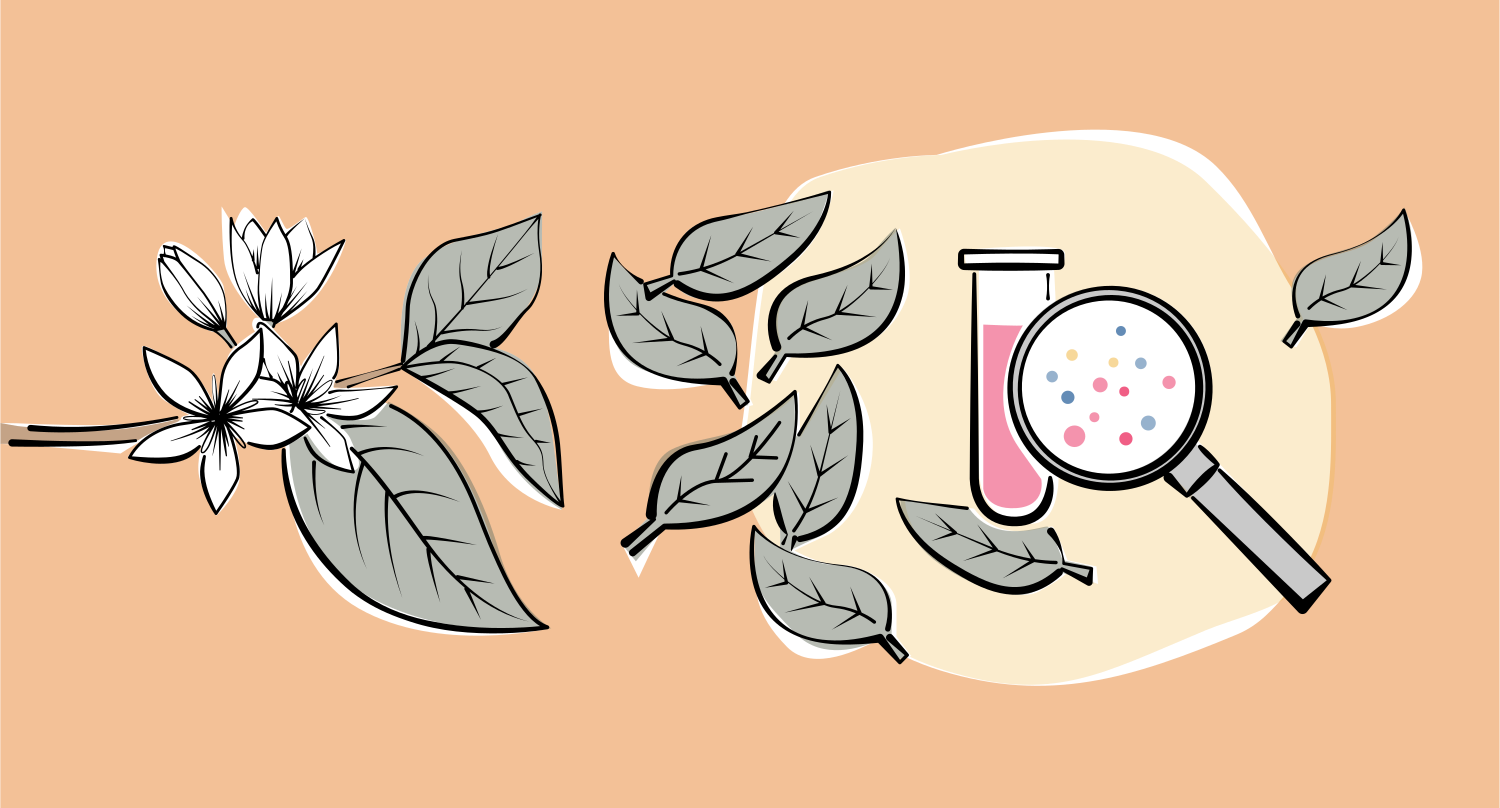
Leaf analysis is a laboratory procedure that gives insight into the plant’s nutritional status. A coffee tree may appear healthy, yet hidden nutrient deficits can reduce yield and waste resources. While soil analysis shows nutrient availability, leaf tissue analysis reveals what the plant actually absorbs.
Coffee plants need certain elements in large quantities, so-called macronutrients: Nitrogen (N), Phosphorus (P), and Potassium (K) as well as Calcium (Ca), Magnesium (Mg), and Sulphur (S). Other nutrients are necessary in smaller amounts, so-called micronutrients: Chlorine (Cl), Iron (Fe), Manganese (Mn), Zinc (Zn), Copper (Cu), Boron (B), and Molybdenum (Mo). All these nutrients are taken up by the plant from the soil.
Leaf analysis results help optimize fertilizer use, manage nutrient supply, improve plant health, and increase yield – while reducing costs and potential harm to the environment.
Leaf analysis should be combined with soil analysis. Combining soil analysis, water, and leaf analysis is the gold standard in coffee cultivation: Soil testing reveals which nutrients are present, leaf testing shows what the plant is absorbing, and water analysis explains the transport, availability, and chemical quality of the nutrients. Besides soil and leaf analysis, simple visual observation of the plant growth and the appearance of the leaves can give a hint of nutrient deficiencies.
213⸱BOby’okufumintiriza
Representative sampling is key. One composite sample requires leaves from 40 trees per hectare (16 trees per acre).
Leaf analysis results are only valid if sampling procedures and laboratory protocols are correctly followed. Laboratories must be officially accredited by state or coffee authorities, or certified to quality standards like ISO 9001, and transparent about their methods. Results should include agronomic recommendations. Ideally, soil and leaf analysis should be performed by the same laboratory for consistent understanding. Laboratories should analyze leaf tissue for all macronutrients (N, P, K, Ca, Mg, S) and micronutrients (Cl, Fe, Mn, Zn, Cu, B, Mo). Always follow the laboratory’s specific sampling procedures.
Leaf analysis can be costly. It is advisable to compare rates and availability across several laboratories. Agricultural university laboratories or those contracted by coffee cooperatives often offer competitive rates. Long waiting times may delay corrective actions. For large-scale plantations or cooperatives, investing in a mobile near-infrared spectroscopy tool can be a time- and cost-effective alternative.
Timing
Leaf analysis should be conducted 1-3 times per year, ideally pre-flowering or during flowering for annual sampling. For large plantations, sampling 3 times per year is recommended, particularly if nutritional issues arise or during fruit development. Additional sampling is advised when unexplained deficiencies appear at scale.
Avoid sampling after granular synthetic or foliar fertilizer application, or during drought, dry periods, or flooding.
Leaves should be collected in the morning when turgid.
Results may take 2-4 weeks.
213⸱CEkutekesa mu nkola
Okuteeka mu nkola
213⸱1Okwetekateka
Each block should be as uniform as possible. Areas with differences in tree size, age, soil type, fertilization, or other major characteristics should be treated as separate samples.
Use the same blocks as for soil sampling to be able to relate the results.
213⸱2Emitendera
In each block, sample only average - type trees.
A minimum of 40 trees per hectare (16 trees per acre) should be sampled to have representative results.
213⸱3
Do not sample from odd/unusual, obviously sick, or exceptionally productive coffee trees.
Cleanliness is critical to prevent falsified results. Use clean and disinfected hands or clean rubber gloves, and ensure all materials (e.g., paper bags) in contact with the leaves are clean.
213⸱4
Keep leaves dry and out of the sun. Prevent decay and rot of leaves.
213⸱5
Make sure not to mix up the different composite samples, so that you can always trace back the analysis result to the block sampled.
213⸱6
213⸱7
Make sure fresh leaves are not exposed to heat and moisture during transport or shipment.
213⸱8
Compare with soil analysis of the same block, if available.
213⸱9
213⸱DEmigaso Mubyenfuna
Okukendeeza kusente ezisasanyizibwa kubijimusa
Ekiwandiko kino kiyamba omulimi okukendeza kubwetaavu bw’ebijimusa ebikolerere, ekimuyamba okukekereza sente ezisasanyizibwa mu by’etaago okumala akaseera.
Okufirizibwa kukendeera
Ekiwandiko kino kiyambako mukukendeeza okufirizibwa mumakungula n’omutindo gw’emwanyi.
Amakungula g’emwanyi g’eyongera
Ekiwandiko kino kiyamba mukw’ogeza amakungula g’emwanyi n’enyingiza y’omulimi
Omutindo gw’emwanyi omulungi
Ekiwandiko kino kiyamba okutumbula omutindo gw’emwanyin’enyingiza y’omulimi neyongera.
Okusalawo nga onebuuza bulungi
Ekikozesebwa kino kiyamba okukola okusalawo okusinziira ku bibuuzo by’ebyensimbi, enkozesa y’ebyokuyingiza, n’enteekateeka y’omulimu.
213⸱EEmigaso gy'obutonde
Ebijimusa ebikolerere by’etaagisa bitono
Ekiwandiiko kino kiyamba omulimi okukendeeza kubwetaavu bw’ebijimusa ebikolerere. Kino kiyambako mukukendeeza omukka omubi n’okwononeka kw’amazzi, eky’ongeza kubulamu bw’ettaka n’okukekereza ebikozesebwa.
Okozesa obulungi ebikozesebwa
Ekiwandiiko kino kiyamba mukukendeeza okozesa ennyo ebikozesebwa, n’engeri gy’ebikosamu obutonde okugeza nga ebijimusa, n’amazzi nga olondoola enkozesa ya byo.