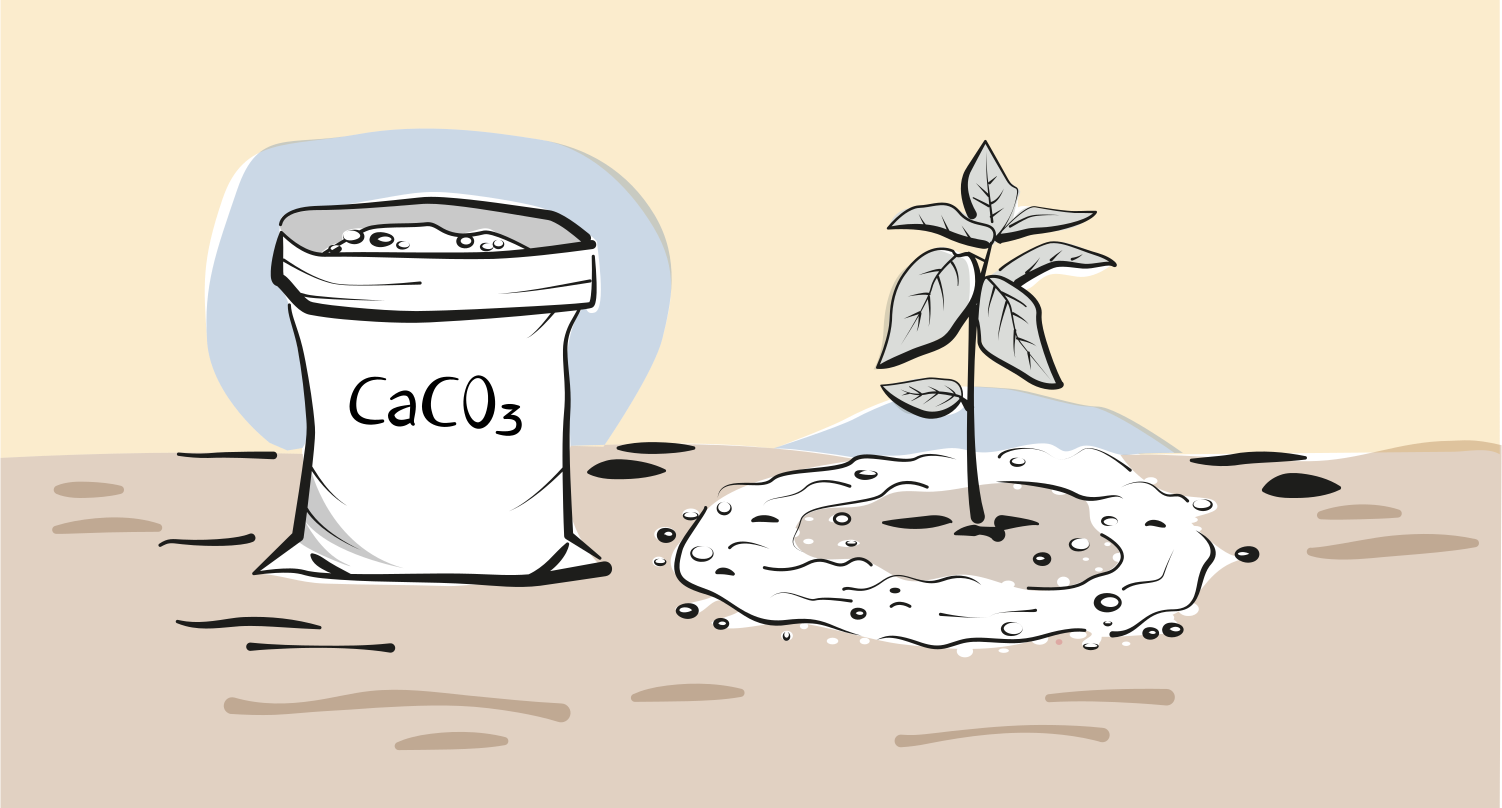
#211Lime application to soil
211⸱AConcept
- Regulates soil pH
- Improves plant nutrition
- Fosters deeper root growth
- Enhances fertilizer efficiency
- Improves soil life
- Increases the coffee yield
Lime is a soil conditioner used to correct soil acidity and improve nutrient availability in coffee-growing soils. When soil pH is too low, essential nutrients become less available to plants, limiting root development and overall crop performance. By adjusting soil pH, lime supports healthier root systems, microbial activity, and more efficient nutrient uptake.
Maintaining balanced soil pH improves the effectiveness of fertilizers and organic amendments, helping reduce nutrient losses and unnecessary input costs. Over time, this contributes to more stable yields, improved soil health, and greater resilience of coffee production systems, particularly under variable climate conditions.
211⸱BTo be considered
Lime application should always be guided by soil testing. In coffee systems, optimal soil pH generally ranges between 5.5 and 6.5, and samples from the top 15-20 cm are sufficient to determine whether lime is needed and at what rate. Applying lime without diagnosis can result in poor performance or nutrient imbalances.
Lime application should always be adapted to the plantation stage and field conditions. Application may differ between new plantation sites and established coffee fields, soil types, different slopes, and rainfall patterns. Applying lime without considering these factors can reduce its effectiveness and increase costs.
Only agricultural lime with adequate neutralizing capacity and suitable particle size should be used. Product quality and purity influence how quickly and effectively soil pH is corrected and help avoid negative impacts on soil health.
Lime is part of an integrated soil management approach. It does not replace fertilizers or organic matter but improves their efficiency by creating more favorable soil conditions. Application strategies should therefore be coordinated with overall nutrient and soil conservation practices.
Timing
Lime should be applied well in advance of planting or fertilization to allow sufficient time for soil pH to adjust. As a general rule, apply lime at least 2-3 months before major field operations.
New plantation sites
Apply lime during land preparation, 2-3 months before planting, preferably before the onset of the rainy season to support incorporation and activation.
Established coffee plantations
Apply lime during the dry season, when field access is easier and runoff risk is lower, and always 2-3 months before fertilizer application, particularly nitrogen-based fertilizers.
Because lime reacts gradually, its effects are not immediate. Reapplication is typically needed every 2-3 years, depending on soil type, rainfall, and production intensity, and should be guided by regular soil testing.
211⸱CImplementation
Materials
211⸱1Preparation


Never apply lime at the same time as nitrogen fertilizers (like urea or ammonium sulfate). Lime can cause nitrogen to volatilize and escape as gas, reducing fertilizer efficiency and wasting money. Always space these applications by at least 2–3 weeks.
Lime dosage must be based on soil test results, considering soil pH, texture, and management intensity. Avoid applying lime without a clear recommendation, as overapplication can disrupt nutrient balance.
Apply lime on dry, calm days to ensure accurate placement and reduce losses from wind or runoff. Avoid application immediately before heavy rain.
In regions with heavy rainfall or highly leachable soils, apply lime in smaller doses over time. This can improve effectiveness and reduce losses.
211⸱2Procedure
New plantation sites


If conditions are extremely dry, lightly moisten the soil surface before applying the lime. This reduces dust during application and helps lime particles settle into the soil more effectively, especially when incorporation isn’t possible.
211⸱3
Established coffee plantations

Place lime at 10 cm distance from the stem to prevent plant damage.
If conditions are extremely dry, lightly moisten the soil surface before applying the lime. This reduces dust during application and helps lime particles settle into the soil more effectively, especially when incorporation isn’t possible.
211⸱4

Overapplication of lime can reduce the availability of micronutrients such as iron, zinc, and manganese. Always follow soil test recommendations and avoid repeated applications without confirmation.
Storage
Store lime in a dry, covered area protected from moisture. Exposure to humidity can cause clumping or premature reaction, reducing effectiveness. Keep lime in sealed bags or containers and avoid placing it directly on the ground.
211⸱DEconomic benefits
Higher coffee yield
The effects of this tool can lead to a higher coffee yield and therefore a higher income.
Better coffee quality
The effects of this tool can lead to a better coffee quality and therefore a higher income.
Lower fertilizer costs
This tool allows for a lower demand for synthetic fertilizers and therefore saves input costs over time.
Lower pesticide costs
This tool reduces the demand for chemical pesticides and therefore saves input costs over time.
Lower renovation costs
This tool increases the lifespan of the coffee trees. They need to be renovated less frequently which reduces the long-term production costs.
Long-term cost savings
The effects of this tool last several years, making it a cost-effective investment compared to short-term inputs that require frequent reapplication.
211⸱EGreen benefits
Better soil life
This tool helps improve soil life (microbes, earthworms, etc.). This plays a vital role in plant nutrition and contributes to a healthy ecosystem.
Less synthetic fertilizers needed
This tool reduces the need for syntheticfertilizers. This reduces carbon emissions and water pollution, improves soil life, and saves resources.
Resilience to climate stress
This tool helps balance soil health, contributing to coffee plants to tolerate drought, heat, and disease pressure more effectively, supporting climate adaptation strategies.